Contextual Studies Attack of the toys
In the first week of lessons we began to cover the production processes within the film industry. The specific aim was to review and understand the digital composting of animated content.
Compositing
In camera compositing and the projection methods which are used during the process.
- The Lumière brothers (Auguste and Louis)
The Lumière Brothers originated the movie projector in 1895 by shinning light through a strip of picture transparencies and enlarging the pictures with an optical lens.
Workers Leaving The Lumière Factory 1895.
.jpg)
- Double Exposure
Inspired Georges Méliès into film making. He became the farther of special effects. Producing one-shot films, moving
versions of earlier shows and accidentally
discovering “stop-action.”
Soon using stop-action, double
exposure, fast and slow motion,
dissolves, and perspective tricks.
A famous example of his work is A Trip to the moon (1902)

Glass shots and the use of miniatures, painting a set into glass, matt painting, digital effects
Motivated shot, actors guide the audience in where to look.
- Foreground Minitaure
Realistic lighting brought out to enhance a painting. Makes the 3D aspect more believable, more flexibility overall. A good example is the film Ben Hur.
- In camera compositing
Negative Matte painting, shot twice on on the same piece of film (top and bottom.) The technique was not overly used however featured strongly in the film Metropolis (1928)
- Projection Methods used in compositing
Rear projection, where a scene is placed perfectly in the background of another shot. Eg. running scenery footage behind a car. Features in films such as Pulp Fiction (1994) ad King Kong (1933)

Willis O'Brien
The father of "stop-motion" animation, Willis O'Brien (1886-1962) was a Hollywood special effects innovator most famous for his work using miniature models of a gorilla in King Kong.

Harryhausen created a form of stop-motion model animation known as Dynamation. This is demonstarted in his first colour film Jason and the Argonauts (1963), featuring a famous sword fight against seven skeleton warriors.

- Rear Projection Matts
A Space Odyssey (1968), used front projection.
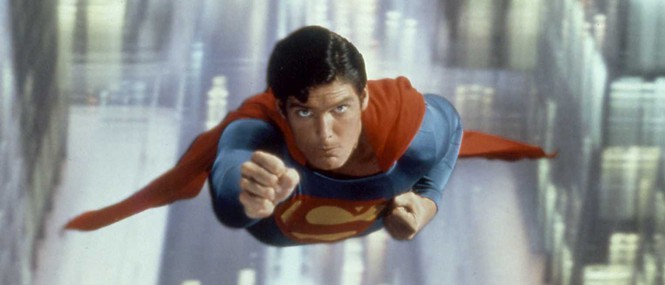
Superman (1978), Zoptics were used to produce the flying effect. Zoptics was created as a new refinement to front projection that involved placing a zoom lens on both the movie camera and the projector. These zoom lenses are synchronized to zoom in and out simultaneously in the same direction.
Travelling mattes
Travelling mattes are necessary because without mattes the combination of the two film elements would lead to the ghosting of images. When Green Screen was created it became a modern form of a travelling matte.
TM Processes
-Williams process is a black back matte and has existed since the 1930's. This process worked only on black and white film. Its drawback was that the process produced messy edges.


This process was used in The Invisible Man (1933)
-Sodium vapour process
A camera which can hold 2 films. The camera has a prism inside which creates 2 images simultaneously. 1-The actor with a black background, 2-A male matte with a monochrome silhouette of the actor These two are composited to over lay the actor onto a background. A popular example of this is used in the 1964 film Mary Poppins.
.jpg)
- Blue Screen Colour Difference Process
This method was more advanced than the Sodium Vapour Process because the blue backdrop was lit from behind. It could be made into a negative to create a matte. The RGB colour channels could be extracted from the original to better colour correct and remove the dark line around the foreground previously seen in the Sodium Vapour Process.
Blue screen was used primary because blue is not generally found in skin colour. It was used in War of the Worlds (1953). The problem with this method is it is very visible on certain objects which reflect light.

- Hand drawn travelling matte, each having a male and female component.
- Green screen, the reason green screen was used was due to computers. Each computer has numerous shades of green and creates less noise overall.
Reference used http://contact-rizzi.blogspot.co.uk/2012/10/hotspots-in-history-of-effects.html
-Optical Printing
Single- headed optical printer
Double-head optical printer
Four-head optical printer

I found this sight to be highly informative about the popular use of visual effects
http://contact-rizzi.blogspot.co.uk/2012/10/hotspots-in-history-of-effects.html
Industrial Light & Magic (ILM) is an American Academy Award-winning motion picture visual effects company that was founded in May 1975 by George Lucas. It was created because Lucas wanted the special effects in Star wars to be nothing like what anyone had seen or created before.
The details are explained in the documentary ILM creating the impossible (2010)
The historical importance of Star Wars (1977) on the modern era of visual effects.
Fractals (Mathematical art)
Elements in nature are better described as having a dimension which is not a whole number, because of a property called self-similarity: if you magnify some part of the object, you will find that part is identical to the whole object, on a smaller scale. A common example is a fern branch, where each leaf resembles the entire branch in miniature.

In terms of special effects fractals allow for object generation. For examples branches or leaves on a tree.

This film is noted for it's extensive use of puppets and the computer generated owl that appears at the opening of the film. The sequence was created by animators Larry Yaeger and Bill Kroyer, and is marked the first use of a realistic CGI animal in a film
Jurassic Park (1993)
This film was a turning point in special effects. It was created using a live action plate. The live action film and background was shot first. Spielberg used animatronic dinosaurs, motion dinosaurs for long shots and on-set effects. Industrial Light & Magic to did the digital compositing. The film was a historical milestone in visual effects.

The CGI era
1990s Industry in transition
The fifth element (1997)
Made the film using a real model and digital model. This was an advancement in movie making, putting the two media's together to create a fantasy scene. The explosion in fifth element was real, today the explosions are created digitally. Evidentially fire is the hardest visual effect to pull off. The alien creatures were created with live actors using silicone gel, puppetry and animatronics for control of the facial features.
-Image Interpolation
The Matrix (1999)
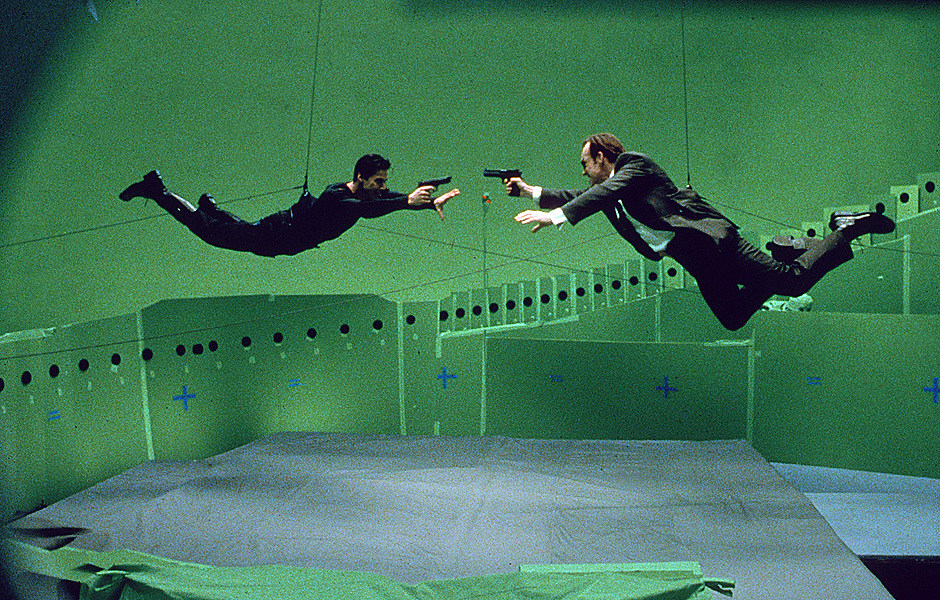
Special effect were created by using a surrounding of digital cameras that were programmed to take the same shot at the same time from all different angles.

Crowd replication and virtual armies
To achieve this logistics is used. For example Ghandi (1982) used 300,000 extras to create the effect and feeling needed. However most films cannot afford the time, money or effort to create crowds. In The Alamo (2004) the crowd was filmed in one position then moved and shot again and again. This was an effective way to create a vast crowd cheaply.
The Battle of Waterloo (1970) Used live action and trained solider to act out a battle.

Advancements had live action and digital media brought together. For example in Troy (2004)
-Weta Digital (digital visual effects company) and Massive (Multiple Agent Simulation System in Virtual Environment)
Massive is a software created specifically for the special effects industry. It allows computers to create thousands or possibly millions (depending on processing power) of individual agents. Its agents use Fuzzy logic (approximated reasoning rather than exact) to create characters with a real world presence.
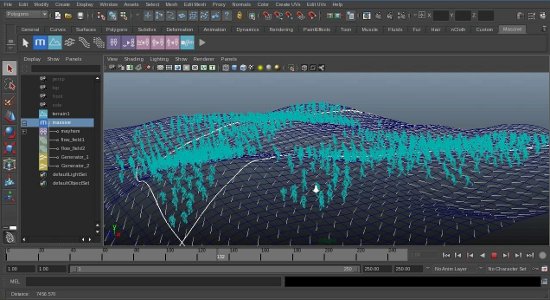
The software incorporates Nukes, which is a supremely fast and powerful node-based compositing application. It has been used in a number of projects such as animation, tv commercials and high quality film. Nuke uses node based technology, nodes acting as a command flow chart. For army sequences it has allowed each solider to be programmed individually, in essence it gives a charcter the ability to think and act accordingly. It has been used in iconic films such as Lord of the Rings and Avatar. The battles each having numerous digitally created characters fighting freely with an array of weapons, encounters and physical response to the surrounding environment.

Further information I found out at http://www.cgmeetup.net/home/making-of-smaug-by-weta-digital/
Reference website (concerning Nukes) http://wolfcrow.com/blog/what-you-can-do-with-nuke/
Battle creation, set extentions and digital enchanment. This can be seen in many films, a partical set is created and then the upper half is created digitally. A good example of this is in Kingdom of Heaven (2004)
-Virtual Backlots
Virtual backlots have little no set at all. This is evident in Sky Captain and the World of Tomorrow (2004) Tracking markers are visible on the set to align the real world camera with it's digital counterpart.

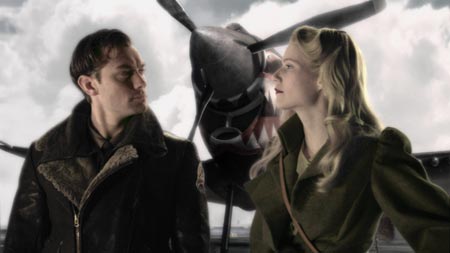
The sound stage shot their actors and filmed their voices.
This technique was explored and used in many films, always alternating between blue and green screen.
Sin City uses green screen as the basis for the set. In this film it is the set that moves to accommodate the surrounding camera shots needed.
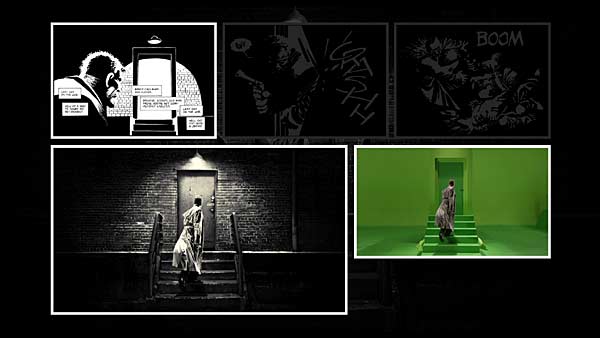
Green Screen Blue Screen pros and cons
-Actor replacement
Interpolation
I,Robot (2004)


The downside to using this method is that the elements of the film do not come together until the end. This changed when the 2000 film Avatar was made. The virtual set (Pandora) was screened live, in real time along with the performing actors.
The real world and digital environment was viewed together. This allowed mistakes to be noted and changed instead of having a finished film with a need to re-shoot certain scenes. The motion capture on Avatar was advanced, a camera was focused purely upon the mouth for real world movement and expression. Performance and universal capture had been used before hand in other films. Monster House (2006) is a good example.

Creating humanoid characters in a digital world creates the uncanny valley. When human features are copied but not altogether accurate it can create a feeling of repulsion with audiences. The digital character can appear to be corspe like and unconving. This is evident in many films such as the character Jules from the film A.I (2001)

It is also evident in some newer films such as Beowolf (2007.) The characters don't look right even although they are strongly based off of real life actors.

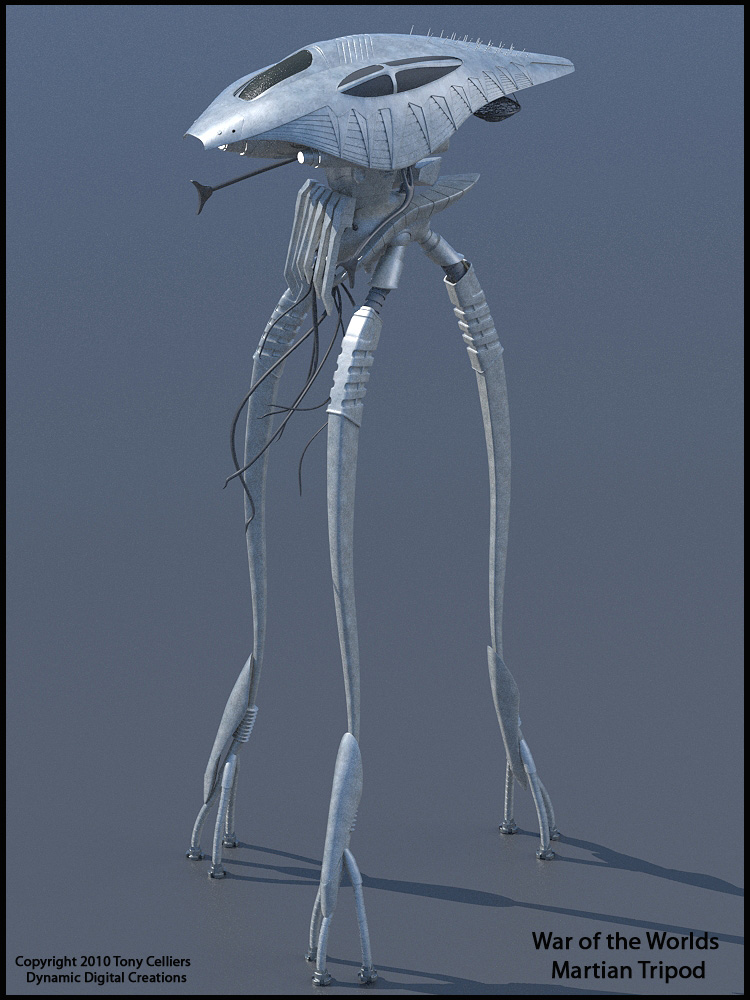
With the advancement in technology more techniques are available to the film industry. The use of Previs (Previsualization) is used to plan out and few effects digitally before filming can begin. By creating and viewing a pre-rendering, preview or wireframe window directors can chose their shots, instruct actors and develop the overall film digitally. This was done in the 2005 remake of War of The Worlds. For the creation of the tripods numerous versions were experimented with, the walk sequence took into account the movement, weight and general effect and feeling wanted.